
The ICC’s New Policy on Slavery Crimes: Implications for genocide and sexual slavery. A Turning Point or a Missed Opportunity?
Author: Giulia Cestaro
Editor: Juan Domínguez García
06/08/2026
7 minutes
“The ICC’s policy on slavery crimes remains a crucial step forward in jurisprudence, […] recognizing slavery as a distinct and prosecutable offense, even under the charge of genocide.”
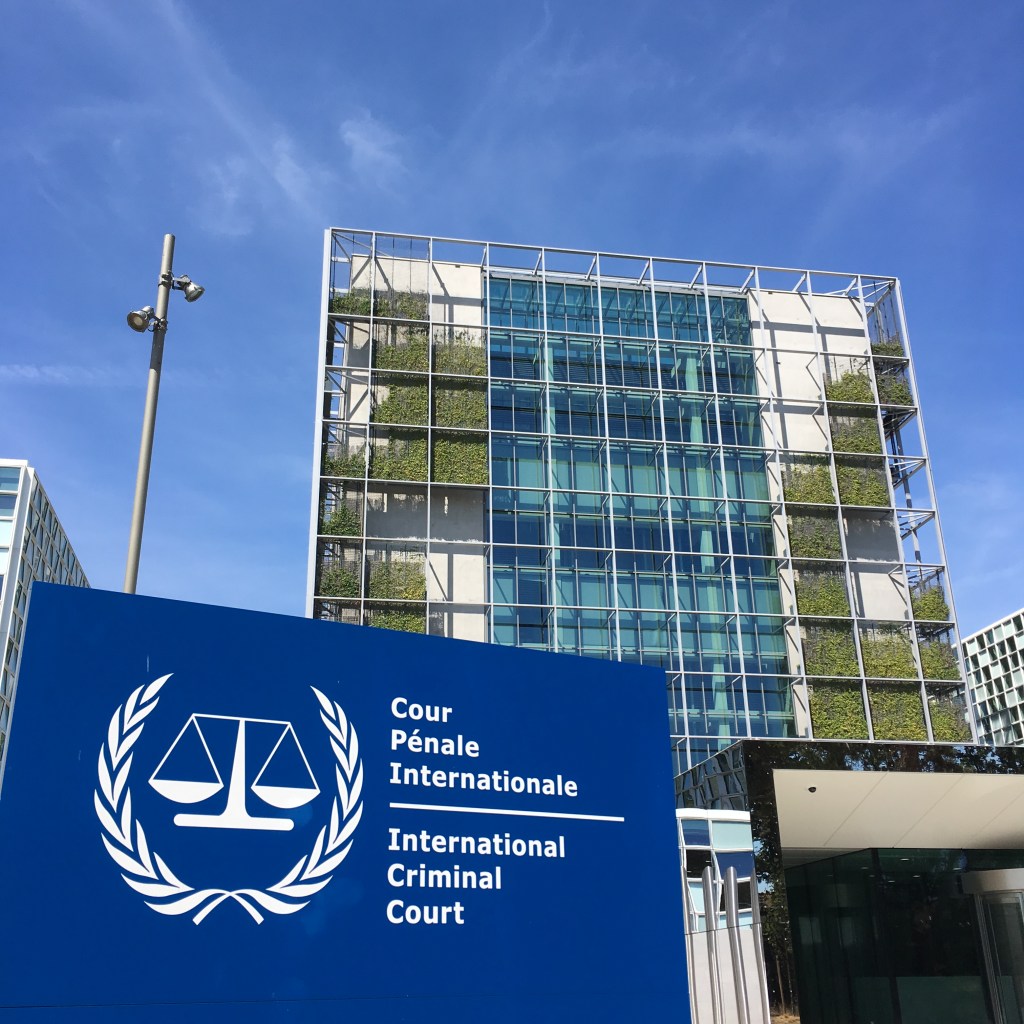
ICC © justflix / Creative Commons Attribution 4.0 International License / Free for use / Wikimedia Commons
The ICC’s new Policy on Slavery Crimes was published by the International Criminal Court Office of the Prosecutor (OTP) in December 2024. The Slavery Crimes Policy denotes a noteworthy development in the field of jurisprudence and represents a pivotal development in the OTP’s approach to addressing some of the most severe breaches of international criminal law. This constitutes the first policy to be issued by an international court or tribunal that is specifically concerned with the issue of international slavery crimes. It appears of relevant importance for the future work of the International Criminal Court in facing the multifaceted dimension of slavery, as it deepens “our understanding of the myriad ways in which the powers of ownership over a person can be exercised, we must adopt a more vigilant approach to identify and respond to these crimes.”
The policy positions itself as a new reference point for the OTP and outlines the spectrum of practices suffered by enslaved persons, including forced labour, sexual, reproductive and psychological harms, as well as the destruction of cultural, religious, family and community ties, and framing these as indicia of enslavement. A consultative process with practitioners, survivors and advocates from several countries were undertaken to provide the foundation for this framework, thereby ensuring that the policy is based not only on legal precedent but also on the lived experiences and historical context of affected people.
Slavery crimes represent a fundamental category of international crimes universally recognised. The Policy on Slavery Crimes is intended to mainly address the issue of accountability, but it also poses attention to the investigation and prosecution of gender-based crimes, gender persecution and crimes affecting children interconnected to slavery. In this New Policy the OTP is undertaking an integrated prosecutorial strategy that is survivor-centred, trauma-informed and sensitive to intersectionality, historical context and cultural heritage. By articulating slavery crimes as jus cogens norms (peremptory rules from which no derogation is permitted) the policy further shows the gravity of these crimes and the responsibility of the ICC to act properly when such crimes occur. By institutionalising these principles and methods, the Policy paves the way for a more assertive prosecutorial approach. Moreover, the policy’s emphasis on the gendered and child-targeted nature of such crimes, its rejection of limiting misconceptions and its integration of cultural and historical context open the possibility to reinterpret sexual slavery as a crime capable of constituting genocidal conduct. This would allow to close the legal gap that has hindered the recognition and prosecution of sexual slavery as a form of genocide so far. In regard to the specific issue of sexual slavery, the ICC New Policy on Slavery Crimes provides guidelines for handling the cases of enslavement and sexual slavery the moment they go in front of the ICC. Sexual slavery is slavery and, as such, is acknowledged as a crime against humanity and war crime by the Rome Statute. The policy specifies the two main features that characterize the crime and, clearly, reflect both slavery and sexual violence:
“Sexual slavery deprives a person of their sexual integrity and autonomy. Like enslavement, sexual slavery requires the intentional or knowing exercise of any or all of the powers attaching to the right of ownership over one or more persons. In addition, the perpetrator must knowingly cause the enslaved person to engage in one or more acts of a sexual nature, such as rape.”
Other Rome Statute crimes can be intertwined with slavery: Other violations of international criminal law can be experienced or witnessed by victims before, during or after the enslavement. The fact that certain conducts comply with the crime of slavery does not exclude also the fulfillment of the requisite for other crimes under the Rome Statute, as the offender can be held guilty of all under cumulative convictions. In regard to this, it is crucial to note that enslavement and sexual slavery are not explicitly recognised by article 6 of the Rome Statute as acts of genocide. However, the ICC’s New Policy poses the basis for their interpretation under this new perspective: The acts and conduct underpinning slavery crimes (such as starvation, branding or family separation) could be characterised as various genocidal acts. This consideration is of pivotal importance as sexual slavery is a form of slavery, and therefore into this new position as well. Hence a clear concrete possibility for the recognition of sexual slavery as a genocidal tool is made for the first time.
Furthermore, the ICC’s Policy on Slavery Crimes sets out a strategic and operational framework grounded in core principles designed to strengthen accountability for enslavement and sexual slavery within the Court’s jurisdiction. Indeed, the approach shall be survivor-centred, trauma- informed, intersectional and gender- sensitive, while contextualisation, and the full and faithful characterisation must be applied consistently across all phases of the office’s work, from the preliminary examinations, to appeal and reparations. This guarantees the recognition of the substantial overlap between slavery crimes, gender-based crimes and crimes against and affecting children. Such application not only strengthens prosecutorial strategies but also expands the potential for integrating slavery crimes into the legal recognition of genocidal acts, particularly when gendered and intersectional harms are central to the perpetrator’s intent.
The adoption of these principles within the ICC’s prosecutorial practice carries significant implications for the reinterpretation of genocide through the lens of sexual slavery. Adopting a survivor-centred and trauma-informed approach shows that, when committed with genocidal intent, sexual slavery is not merely a collateral harm, but a key mechanism through which the destruction of a protected group is pursued. Emphasising intersectionality enables prosecutors to recognise sexual slavery as a crime that is both gendered and identity-based, reflecting how the persecution of women, girls and other vulnerable individuals intersects with ethnicity, religion or nationality in the context of genocide. This would show that sexual slavery can constitute a form of genocide “serious bodily or mental harm” or “imposing measures intended to prevent births” as defined in Article II of the 1948 Genocide Convention.
Contextualisation as well as full and faithful characterisation are also of particular relevance in this regard. When slavery crimes occur within the broader framework of an armed conflict or a genocidal strategy, the link between the systemic use of sexual slavery and the intent to destroy a group physically, socially or reproductively, becomes more evident. Full characterisation ensures that prosecutions reflect the totality and complexity of survivors’ experiences, which can include reproductive harm, social disintegration and intergenerational trauma. All of them can be an integral part of genocidal campaigns. If applied consistently across all procedural phases, these core principles could lead a prosecutorial shift where slavery crimes are not confined only to the category of sexual violence but are recognised as potentially constitutive of genocide itself. This would not only deal with gender biases in international criminal law that have existed for a long time, but would also make the work of the ICC consistent with a feminist and intersectional reinterpretation of the Genocide Convention, a reinterpretation that would be able to capture the complex realities of group annihilation through sexual slavery.
Where sexual slavery is prosecuted as an act of genocide, the convictions not only carry heavier sentences but also hold a distinct moral weight in affirming the severity of the crimes, which could reinforce the deterrent effect of international criminal justice. On a broader perspective, the policy’s implementation could shift international perceptions by demonstrating that sexual slavery, particularly when used as an instrument of genocide, is not a secondary issue but a central atrocity that warrants the highest level of prosecutorial attention. Such a practice would contribute to the development of a broader, more inclusive and intersectional international criminal law, which would be capable of recognising and addressing the whole range of violence that leads to the destruction of minority groups. In doing so, the ICC could set a normative precedent that would influence both domestic jurisdictions and future treaty developments. However, despite the progressive nature of the International Criminal Court’s 2024 Policy on Slavery Crimes, the policy is not immune to legitimate critiques, from both doctrinal and practical viewpoint, that reveal its potential limitations in shaping the prosecutorial landscape.
Firstly, several scholars, NGOs and feminist activists have welcomed the policy’s intent but raised concerns about its practical application. For instance, Amnesty International recognizes the OTP’s commitment to accountability but criticizes the compressed consultation timeline, arguing that it “does not realistically allow for the type of participation of relevant stakeholders that the current policy requires and deserves” and urging a more inclusive and trauma-sensitive approach . This uncovers the risk that the policy might be implemented without sufficient input from the communities most affected, which would undermine its survivor-centred and intersectional goals. Secondly, the OTP’s ability to operationalise the policy’s standards may be significantly hindered by resource constraints and a lack of political will. Comprehensive investigations into slavery crimes require gender-competent teams, cultural mediators, forensic experts and sustained victim support, all of which demand considerable funding and institutional infrastructure. The policy’s enhanced procedural demands are commendable, but they may not be met by the necessary political or financial support, which could compromise its effectiveness, especially in contexts where the ICC is already struggling with cooperation.
In conclusion, while the policy outlines a promising normative path, its transformative potential is contingent on two critical preconditions: The genuine involvement of survivor communities in the shaping of implementation, and the dedication of sufficient institutional and political resources to its continued enactment. In the absence of such measures, there is a risk that the initiative may devolve into a mere symbolic gesture, while remaining rhetorically progressive, but ultimately offering limited practical support. This is particularly salient in the context of understanding the comprehensive nature of gendered and intersectional violence that underlies both slavery and genocide. Nonetheless, the ICC’s 2024 policy remains a crucial step forward in jurisprudence, especially in its potential to address and explicitly recognising slavery as a distinct and prosecutable offense, even under the charge of genocide.
Disclaimer: The views and opinions expressed in this article are those of the author(s) and do not necessarily reflect the official position of the Neo Institute Europa. The Neo Institute publishes contributions to foster informed public debate. While articles may be reviewed and edited, the author(s) remain solely responsible for the claims, interpretations and conclusions expressed. This content is provided for informational purposes. The Neo Institute Europa shall not be liable for any loss or damage arising from reliance on this article.

