
Diplomatic Pragmatism between Portugal and the US during the Iran War
Author: Diogo Vieira Ferreira
Editor: Adrian Diez Cuadrado
07/05/2026
7 minutes
“The Azores’ mid-Atlantic location provides Portugal with disproportionate strategic relevance that far exceeds its geographic size or population.”
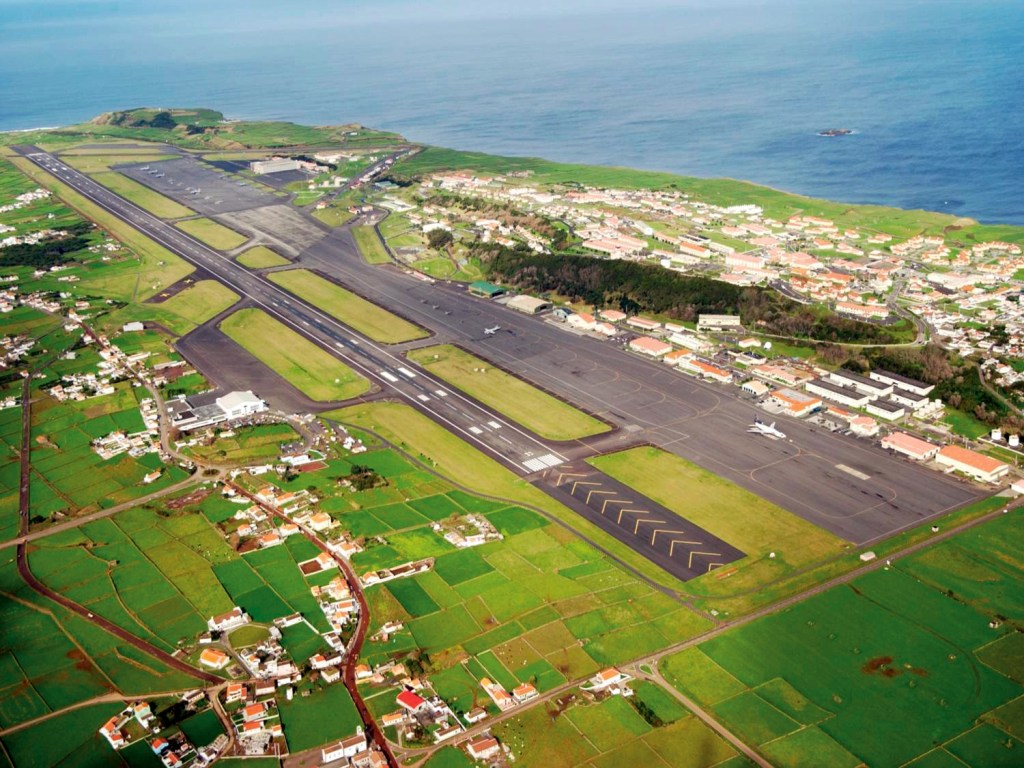
Lajes Air Base © Guido Melo / Creative Commons Attribution 4.0 International License / Free for use / Wikimedia Commons
The US campaign against Iran: From uncertainty to direct military action
The evolving international tensions surrounding the ongoing conflict in Iran have once again demonstrated the importance of strategic alliances and logistical infrastructures. In this context, the military actions of the United States are increasingly characterised as direct intervention, effectively constituting an attack on Iranian-linked targets. While Iranian strikes on U.S. military installations and regional infrastructure are framed as retaliatory measures.
On February 18th, 2026, the United States had stationed aircraft cargo, tankers and fighter jets on the Lajes Airbase, located in Terceira, part of the Portuguese archipelago of the Azores. The heavy U.S. military movement in Lajes occurred after U.S. president Donald Trump made several threats of direct military intervention on Iran should they not comply with his demands on not reestablishing nuclear weapons, as well as challenging a massive change of government after the Iranian regime’s violent crackdown on protesters. This heavy activity reflected a growth of uncertainty on whether the U.S. troops would enter Iranian territory and commence a ground conflict.
Therefore, on February 28th, 2026, 13 of those aircraft tankers took off from the Azores to support Operation Epic Fury, the joint US-Israel intervention in Iran that attempted striking targets to dismantle the Iranian regime’s security apparatus, ballistic missile arsenal and production capacity. On April 2nd, a U.S. “killer drone” landed on the Lajes Airbase for maintenance and refuelling as part of the U.S. military campaign. Portuguese prime-minister, Luis Montenegro, defended the decision to allow the U.S. to use the base for “defensive purposes” during the campaign against Iran, while the Portuguese minister for foreign affairs, Paulo Rangel, stated that the U.S. can use the Lajes Airbase for any operation without informing the Portuguese government beforehand. On the opposite side, the (then) Portuguese president of the republic, Marcelo Rebelo de Sousa, condemned the U.S. for the strikes on Iran, where he expressed concerns over the decline of diplomacy, multilateralism and international law.
Strategic utility without formal belligerency
Historically, Lajes has served as an essential transatlantic centre, facilitating the swift movement of military forces and gear among North America, Europe and the Middle East. Its strategic significance has been reemphasised during times of crisis and international warfare, serving as a logistics hub during key conflicts, noticeably World War II.
Portugal’s approach reflects a nuanced interpretation of alliance obligations under NATO. While the country remains a committed member of the alliance and maintains bilateral defence agreements with the United States, it has avoided direct military engagement in the Iran conflict. Instead, Portugal has allowed the continued use of Lajes Airbase for logistical support operations.
This distinction is critical. By facilitating transit, refuelling, and staging operations, Portugal contributes materially to U.S. military capabilities without formally entering the conflict as a belligerent. This aligns with international law principles that differentiate between active participation in hostilities and the provision of support infrastructure.
Diplomatic pragmatism as a state strategy
The concept of diplomatic pragmatism is particularly useful in interpreting Portugal’s behaviour. Rather than adhering strictly to ideological or moral-driven policies, Portugal has calibrated its actions based on strategic benefit, legal frameworks and domestic political considerations.
Comparing diplomatic positions to its Iberian neighbour, Portugal and Spain have significant differences in their positions regarding the ongoing conflict in Iran, primarily concerning military logistics and diplomatic tone toward the US. While both nations have issued joint statements condemning Iranian attacks on neighbouring countries and calling for de-escalation, their practical support for the US-led campaign varies. On one hand, Portugal supports US efforts, permitting access to the Lajes Airbase. On the other hand, Spain, under Prime Minister Pedro Sánchez, has declined US requests for using Rota and Morón bases, even closing its airspace to U.S. operations for the Iran war. Additionally, Portugal portrays itself as a reliable ally, whereas Spain has openly criticised the US actions, likening them to the Iraq War, its consequences, and facing potential trade reprisals from the US.
Several factors shape the Portuguese approach: First, there is geostrategic positioning, the Azores’ mid-Atlantic location provides Portugal with disproportionate strategic relevance that far exceeds its geographic size or population. Second, alliance credibility, maintaining access for US forces reinforces the Azores’ reliability (and Portugal as a whole) as a NATO member. Third, there is domestic political balance, by avoiding direct military involvement, Portuguese authorities are trying to mitigate internal political opposition and uphold a narrative of non-aggression. This balancing act portays Portugal to remain both a logistical ally and a sovereign actor with an independent foreign policy stance.
Internal opposition and concerns
The use of Lajes Base illustrates the ambiguity inherent in modern conflict participation. While Portugal is not directly engaged in hostilities, its territory supports operations that may be linked to active combat zones. Nevertheless, despite its measured stance, Portugal’s policy is not without internal debate. The use of Lajes Airbase by the U.S. has generated political scrutiny in this period of heightened military activity.
Domestically, political parties have raised concerns on several fronts. Accusations from radical to moderate left-wing parties, including the Portuguese Communist Party (PCP), the Left Bloc, LIVRE, and the Socialist Party (PS) condemned the current government’s stance on indirectly being part of the Iran conflict and demanding for clear transparency on the usage of the Lajes Airbase. They argue that instead of promoting a policy of peace and diplomatic conflict resolution, allowing the U.S. to use Portuguese territory for military strikes disregards the respect for international law.
Additionally, with the ongoing blockade of the Strait of Hormuz, as a result from the conflict, prices for food and fuel have risen exponentially, and Portuguese citizens are heavily affected by this rise. Higher natural gas prices will result in increased utility bills for households and rising energy costs will contribute to inflation amid the government’s fiscal challenges.
A growing fear of being attacked by Iran, though unlikely, is also a concern among Portuguese society. Currently, Portugal’s military capabilities are limited, particularly concerning potential attacks on U.S. infrastructure abroad, notably affecting the strategic Lajes Airbase. Portugal’s integration into NATO offers additional security, but with Donald Trump’s multiple threats to leave NATO, the North Atlantic alliance may be hanging by a thread.
Regime dynamics in Iran and a multipolar observation of the conflict
Any analysis of the conflict must also account for internal dynamics within Iran. Reports from organisations and outlets have documented the Iranian regime’s violent suppression of domestic protests, with estimates suggesting that thousands of demonstrators have been killed in recent years.
These internal conditions shape how external actors justify their policies. For the US and its allies, Iran’s human rights record is frequently cited as part of a broader rationale for containment and intervention, even as critics argue that military escalation risks exacerbating civilian suffering.
Overall, Iran’s nuclear capabilities remain a contentious topic, with claims about its weapons development often influenced by Israeli intelligence. Israel perceives Iran as a major threat and pushes for US action, while US administrations have upheld a confrontational stance with a fluctuating public support that has declined over time. This has significantly impacted public perception of the current US administration, both abroad and domestically.
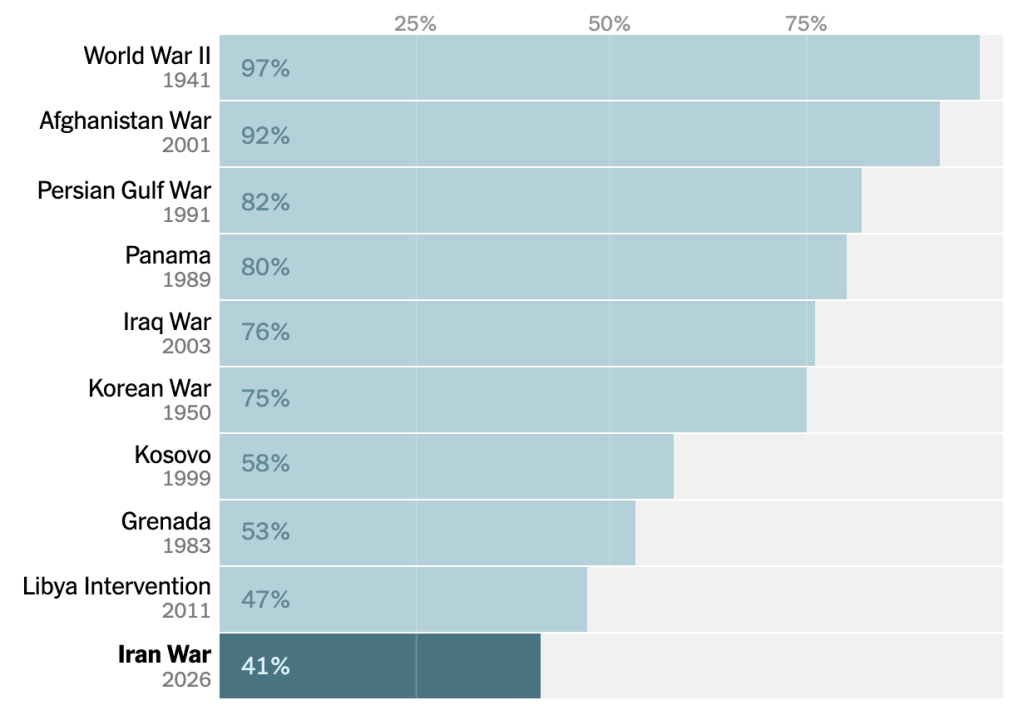
Figure 1 – Public support for U.S. military intervention in the first days of international conflicts (The New York Times)
The conflict also unfolds within a broader multipolar landscape. Powers such as China and Russia are not passive observers. Both monitor and, to varying degrees, shape the conflict through diplomatic positioning, economic ties and strategic signalling. While Portugal’s stance is to benefit from U.S. diplomatic relations, China and Russia have capitalized on the conflict to undermine U.S. interests. By avoiding direct military involvement, China has provided material assistance and diplomatic cover to Tehran; while Russia has benefited from the surge in oil prices to bolster its own war budget in Ukraine. Their involvement demonstrates a key feature of contemporary warfare, in the sense that conflicts are rarely isolated. Instead, they become arenas for indirect competition among major powers, complicating decisions for smaller allied states like Portugal.
Continuity and adaptation in US–Portugal relations
The US-Portugal relationship is one of the oldest continuous diplomatic partnerships in the world. Portugal was the third country to formally recognise the US’ independence in 1783, maintaining diplomatic relations since 1791. The current situation demonstrates not a departure, but a continuation of this relationship under new international conditions.
The Lajes Airbase has historically supported operations in conflicts such as the Gulf War and interventions in the Middle East, notably the Azores Summit of 2003 where world leaders, including former U.S. president George W. Bush, discussed plans for an invasion in Iraq. Its use today reflects continuity in strategic cooperation, even as the political framing evolves. Portugal’s stance signals that alliance commitments need not translate into automatic military engagement but can instead take forms adapted to contemporary diplomatic realities.
Ultimately, Portugal’s role in the ongoing Iran conflict shows the relevance of diplomatic pragmatism in 21st century international relations. By allowing the use of the Lajes Airbase while refraining from direct involvement, Portugal exemplifies a model of calibrated cooperation, one that balances alliance obligations with national autonomy. In an era where conflicts increasingly blur the lines between direct and indirect participation, such approaches may become more common.
Portugal’s strategy suggests that smaller states, when leveraging geographic and diplomatic assets effectively, can exert meaningful influence without overextending their political or military commitments. As conflicts grow more interconnected and indirect participation becomes harder to distinguish from active involvement, states must continuously renegotiate the boundaries of responsibility. Portugal’s strategy illustrates both the possibilities, and the limitations, of pragmatic diplomacy in an era defined by complex, multi-layered conflicts.
Disclaimer: The views and opinions expressed in this article are those of the author(s) and do not necessarily reflect the official position of the Neo Institute Europa. The Neo Institute publishes contributions to foster informed public debate. While articles may be reviewed and edited, the author(s) remain solely responsible for the claims, interpretations and conclusions expressed. This content is provided for informational purposes. The Neo Institute Europa shall not be liable for any loss or damage arising from reliance on this article.


Leave a Reply