
Gaza in the Streets: What Europe is Still Refusing to Hear
Author: Sara Boanini
Editor: Juan Domínguez García
10/01/2026
3 minutes
“So far, the streets have made their case, whether Europe chooses to hear it is a political decision, and one that will not be forgotten.”
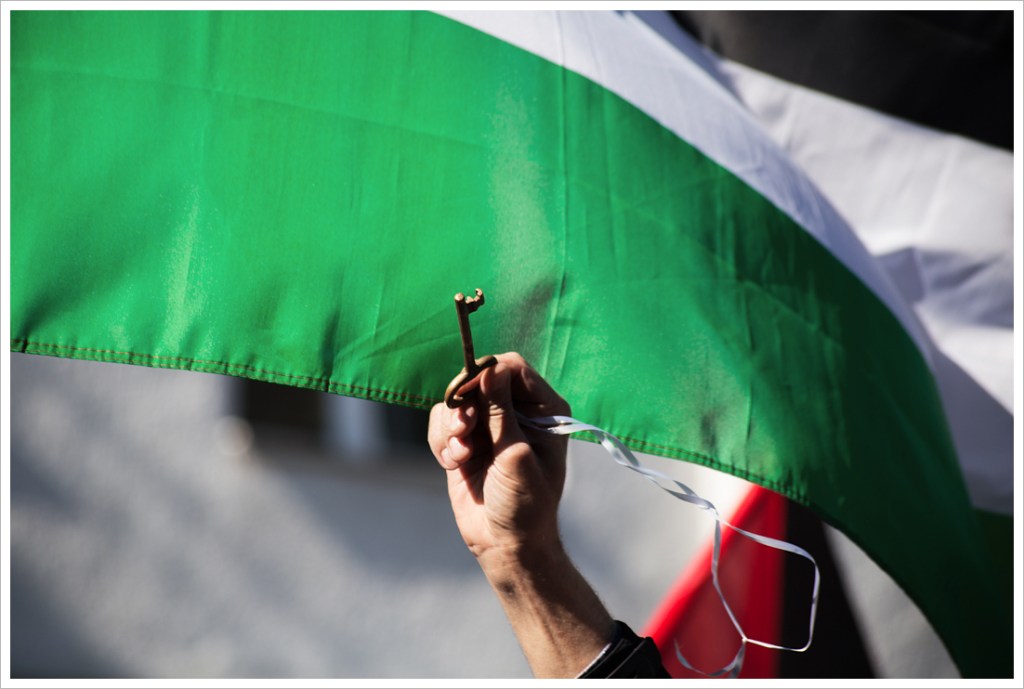
Palestine Nakba Day demo in Berlin (May, 2015). © Palestine Nakba Day demo in Berlin / Creative Commons Attribution 4.0 International License / Free for use / Flickr
From London to Rome, from university campuses to industrial ports, people have marched in solidarity with the citizens of Gaza. They come from different generations and backgrounds, from students to dockworkers, to faith groups and to diaspora communities, all sharing a growing sense that Europe’s response to Gaza is morally and politically inadequate. These protests are a sustained challenge to the way European power understands itself, and they have been visible across dozens of countries and sustained over time.
What the protests have already achieved is undeniable. They have forced Gaza into the public conversation, refusing the comfort of diplomatic abstraction. The scale and persistence of pro Palestine mobilisation has turned Gaza into a test case for democratic freedoms in Europe, exposing how quickly governments restrict protest when foreign policy becomes uncomfortable. Arrests, protest bans and heavy policing across European cities are an institutional reflex to manage dissent, but they do not address nor confront its message. The case has been made multiple times that the European Union speaks fluently about human rights abroad, yet appears unsettled when its own citizens ask for consistency.
Italy’s general strike for Palestine made this contradiction particularly visible. Workers and students coordinated walkouts, port actions and campus occupations. This mobilisation was the result of years of organising within labour and student movements and did not emerge spontaneously. Normal life was disrupted and political indifference briefly shaken. Yet, European policy remained largely unchanged. The strike demonstrated both the power of collective action as well as its limits when institutions choose delay over decision.
European leaders frequently justify this inertia by pointing to international circumstances. Alliances must be preserved, security maintained and escalation avoided. These concerns shape European responses to pro Palestine protests and constrain official language. But constraint is not the same as powerlessness. The EU retains enough capacity to enforce stricter arms export oversight, to apply meaningful conditionality in its diplomatic positions, and to prioritise humanitarian access through coordinated pressure. That these measures remain underused is a political choice by governments.
Part of the discomfort lies in the emotional force of the movement itself. Research on protest dynamics has shown that moral outrage and empathy, particularly when amplified through social media, can mobilise large numbers of people rapidly and across borders. The Gaza protests clearly show in this pattern, however, emotion is often treated by institutions as a liability rather than a democratic signal, as protesters are framed as disruptive or unreasonable, which in turn allows policymakers to sidestep the substance of their demands.
A different response is possible. European institutions could choose engagement over silencing and clarity over ambiguity. Opening sustained parliamentary debate, acknowledging public concern and communicating policy limits honestly would reduce polarisation rather than intensify it. Protest movements do not demand instant solutions to complex conflicts, but they do demand seriousness, accountability and coherence in institutional values.
The movement itself also faces a moment of reckoning. Moral clarity has generated visibility, but visibility alone does not sustain influence. European decision making operates through legal frameworks, committees and incremental procedures. When protest movements connect street mobilisation to these mechanisms, they survive the current news cycle. History suggests that sustained change does not require majority participation in one specific moment, but a committed minority capable of maintaining pressure over time.
Europe now stands exposed. The protests for Gaza have reshaped public consciousness and tested democratic tolerance. What remains unresolved is whether European leaders will treat this mobilisation as an inconvenience to be managed or as a message to be taken seriously. The impact of a social movement is rarely clear when it first begins, it instead shows up over time and when institutions are forced to respond. So far, the streets have made their case, whether Europe chooses to hear it is a political decision, and one that will not be forgotten.
Disclaimer: The views and opinions expressed in this article are those of the author(s) and do not necessarily reflect the official position of Neo Institute Europa. The Neo Institute publishes contributions to foster informed public debate. While articles may be reviewed and edited, the author(s) remain solely responsible for the claims, interpretations and conclusions expressed. This content is provided for informational purposes. The Neo Institute Europa shall not be liable for any loss or damage arising from reliance on this article.

